
Armenia as a Regional Business Gateway
Armenia is useful as a base when your product actually changes in Armenia and qualifies as Armenian-origin. It sits inside the Eurasian Economic Union, benefits from EAEU trade agreements with Iran and the UAE and, since 10 October 2026, from temporary EU tariff cuts. Passing goods through the country does not by itself give any of these benefits.
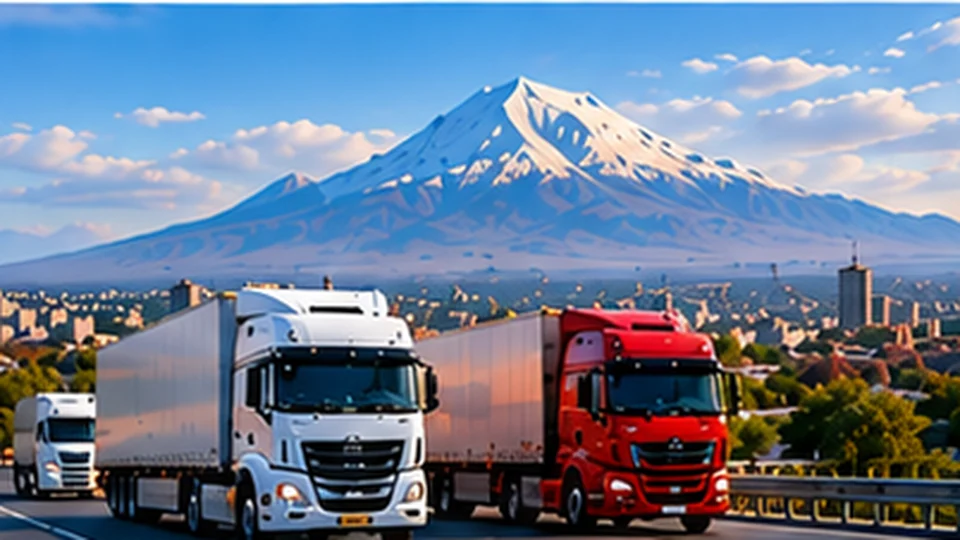
Armenia is useful as a base when your product actually changes in Armenia and qualifies as Armenian-origin. It sits inside the Eurasian Economic Union, benefits from EAEU trade agreements with Iran and the UAE and, since 10 October 2026, from temporary EU tariff cuts. Passing goods through the country does not by itself give any of these benefits.
What are the main trade doors?
- EAEU: Armenia is a member, so EAEU customs and technical rules apply to what you sell in the union.
- Iran: the EAEU–Iran free trade agreement has been in force since 15 May 2025 (EEC).
- UAE: the EAEU–UAE partnership agreement, signed 27 June 2025, was reported to take effect on 6 October 2026; confirm the date with the Eurasian Economic Commission.
- EU: temporary tariff cuts apply from 10 October 2026 for two years.
Armenia left the EU's GSP scheme on 1 January 2022 after the World Bank moved it to the upper-middle-income group, so older articles that mention GSP+ are out of date.
What are the new EU measures?
The Council of the EU adopted temporary trade measures for Armenia on 24 September 2026. They apply from 10 October 2026 for two years and liberalise about 80% of Armenian exports to the EU. Annex I products are duty-free without limit, and Annex II products are duty-free within annual quotas. Proof of origin can be an EUR.1 certificate, an invoice declaration (an approved exporter status is needed above EUR 6,000) or a REX declaration, and safeguards apply.
The Council said the measures respond to trade restrictions recently imposed by Russia, which cover nearly 99% of Armenia's fresh fruit, vegetable and plant exports to Russia.
What do the numbers show?
Armenia's foreign trade in 2025 was USD 21.43 billion, down 29% from 2024: exports USD 8.40 billion and imports USD 13.03 billion, according to Armenpress citing the Statistical Committee. Exports to the EU rose 9.2% to USD 667 million, according to the Minister of Economy. A swing of this size suggests that part of the trade is volatile; build your plan on products and routes you control.
What is the catch?
Origin. Preferences apply to goods that meet the origin rules of each agreement. Importing a product into Armenia and sending it on does not make it Armenian. Minimal processing usually does not either. Get the origin analysis done by a customs specialist before you design a route around Armenia.
What to verify before you act
- The origin rules and product lists of each agreement for your HS code.
- The entry-into-force date of the EAEU–UAE agreement.
- Whether the EU measures cover your product in Annex I or II, and the quota status.
- Customs and conformity requirements in the EAEU (the EAEU technical regulations).
Sources
- Eurasian Economic Commission: trade agreements with Iran
- EEC: EAEU and Iran full free trade agreement entered into force
- WAM via Gulf News, 6 October 2026: UAE–EAEU trade deal takes effect
- TASS, 6 August 2026: EAEU–UAE agreement entry into force
- Council of the EU, 24 September 2026: temporary trade measures for Armenia
- European Commission, Access2Markets: EU temporarily liberalises trade with Armenia
- EU GSP Hub: Armenia (archived)
- Armenpress, 11 February 2026: Armenia foreign trade in 2025
- ARKA: Armenia exports to the EU in 2025
Discuss the next step for your business
Share your product or service, target customer and current challenge so we can assess the fit and a relevant next step.
