
How can manufacturers find new industrial B2B customers?
Have the product and capacity, but not enough relevant new buyers? Start with the target account, not a purchased phone list.

Start by defining the company you actually want to reach
Industrial customer acquisition means identifying businesses with a plausible need, checking product fit and opening a relevant conversation. The goal is not a larger contact database; it is a manageable pipeline of qualified opportunities.
Before increasing advertising or hiring, ask which buyer segments use the product and what would make them consider an alternative supplier.
1. Segment your target market
“Every factory” is rarely a useful segment. For hardware suppliers, UPVC window manufacturers, aluminium fabricators, specialist workshops, contractors and wholesalers buy differently. Test two or three closely related segments first.
2. Define an ideal customer profile (ICP)
Keep a practical list of industry, business type, geography, product application, cooperation potential and purchasing process. It should help salespeople distinguish relevant accounts before spending time on outreach.

3. Where can you identify industrial prospects?
Industry-specific web research
Search manufacturers, professional directories and trade associations by the sectors that use your product, not just by your product name.
Trade fairs and exhibitor lists
These reveal active companies but do not prove immediate purchasing intent.
Existing and inactive relationships
Review successful customers, earlier enquiries and credible business contacts for patterns of fit.
LinkedIn and professional networks
Use them to understand companies and buying roles, not to send identical messages indiscriminately.
Supply-chain partners
Relevant distributors, specialist contractors and complementary suppliers may help reveal realistic routes to market.
4. A contact list is not a qualified pipeline
A list of 500 businesses does not equal 500 suitable customers. Contact details may be outdated or the company may not use the product. Use clear stages: raw list → relevant account → qualified prospect → first conversation → sales opportunity.
5. Find out who participates in buying
Purchasing, production, engineering, project management, finance and management may all influence a technical decision. Respect the buyer’s formal procurement process and provide the right information to each role.
6. Make initial outreach relevant
Explain why the company is relevant, where your product fits and what small next step you suggest. The first interaction is often about confirming fit, not securing an immediate order. Respect privacy and communication preferences.
7. Run a small prospecting experiment
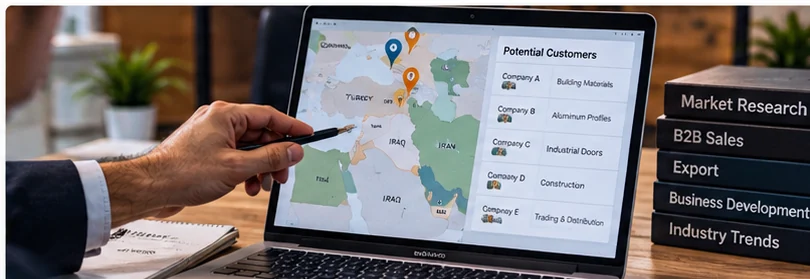
Choose two buyer segments and, for example, find ten relevant companies in each. Verify fit, make a considered introduction and record outcomes. Twenty is an illustrative pilot size, not a universal benchmark or promise.
8. Measure progression, not just activity
Track accounts identified, relevant accounts, valid connections, meaningful responses, qualified prospects and opportunities created. Agree on the definition of each stage before comparing team activity.
Five common mistakes
Targeting everyone, treating purchased data as verified leads, sending the same introduction to all industries, unclear ownership and poor recording all waste sales capacity. Once a prospect reaches the quotation stage, use the separate quote-to-order guide to diagnose a different problem.
Should prospecting be outsourced?
It depends on in-house capacity. A company may already have sales staff yet still need specialist support with ICP, market mapping or workflow design. Define responsibilities and success measures before working together.
Frequently asked questions
What is the best way for a factory to find customers?
Segment by application and buyer type, then test the most appropriate channel for each group.
Is buying a phone database enough?
No. Account fit, data validity and realistic commercial potential must be checked.
How do you identify a suitable buyer?
Compare company activity, application, location and commercial conditions against your ICP.
How long does industrial prospecting take?
It depends on product complexity, buying cycle, industry and channel. No fixed timetable or orders can be promised.
Do you need a CRM on day one?
Define basic account data, contact stages and ownership first, then choose tools.
Next step
If you need a clearer target market or prospecting process, explore Mojtaba Dashti’s B2B sales development service for businesses operating in Iran and submit a focused assessment request.
Discuss the next step for your business
Share your product or service, target customer and current challenge so we can assess the fit and a relevant next step.
On this page
- Start by defining the company you actually want to reach
- 1. Segment your target market
- 2. Define an ideal customer profile (ICP)
- 3. Where can you identify industrial prospects?
- Industry-specific web research
- Trade fairs and exhibitor lists
- Existing and inactive relationships
- LinkedIn and professional networks
- Supply-chain partners
- 4. A contact list is not a qualified pipeline
- 5. Find out who participates in buying
- 6. Make initial outreach relevant
- 7. Run a small prospecting experiment
- 8. Measure progression, not just activity
- Five common mistakes
- Should prospecting be outsourced?
- Frequently asked questions
- What is the best way for a factory to find customers?
- Is buying a phone database enough?
- How do you identify a suitable buyer?
- How long does industrial prospecting take?
- Do you need a CRM on day one?
- Next step
